

From consumer products and industrial equipment OEMs to mission-critical medical and defense markets, manufacturers across a wide variety of industries face different performance requirements, regulatory expectations, and environmental conditions. While applications vary, the core challenge remains the same: selecting the right combination of materials, molding processes, and part geometry to maximize performance.
Success starts with understanding that no two applications are identical. Combining expertise in compression and injection molding, thoughtful material selection, and early design-for-manufacturing collaboration is critical to develop molded components that meet the demands of each customer’s application.
The engineering team should evaluate application requirements, select materials suited for demanding environments, and determine the most appropriate molding process while maintaining consistency, durability, and efficiency in production.
Why Industry Experience Matters in Molding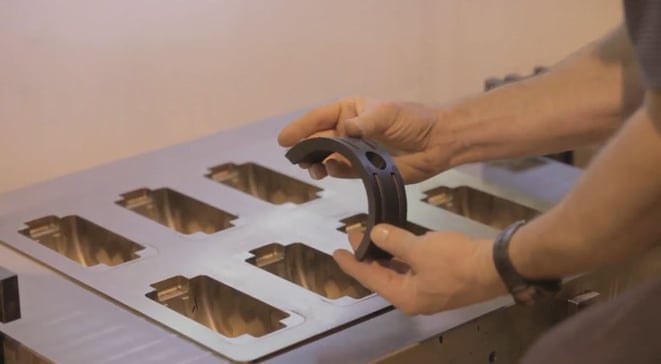
While a molded component’s geometry may be similar across different industries, the demands placed on it are rarely one-size-fits-all. What works in an industrial environment may not perform well in a medical application or aerospace application, and vice versa. Different industries place different demands on components, including:
- Mechanical strength under load
- Resistance to chemicals or environmental exposure
- Stability under high or fluctuating temperatures
- Tight dimensional tolerances
- Compliance with regulatory or safety standards
For example, a component used in transportation may prioritize vibration resistance and durability, while a medical device may require precision, cleanliness, and material traceability.
Manufacturers that work across multiple industries develop a broader understanding of how materials and processes behave under different conditions. This cross-industry experience enables engineering teams to recommend custom molded solutions that go beyond conventional approaches, like helping customers achieve better performance and reliability.
Understanding the Application First
Before selecting a material or determining a molding process, the most critical step is understanding the application itself.
Engineering teams must evaluate several key factors.
- Operating Environment: Will the component be exposed to moisture, UV radiation, or harsh conditions?
- Mechanical Loads: What stresses, impacts, or forces will the part experience?
- Temperature Exposure: Will the part operate in high-heat or fluctuating thermal environments?
- Chemical Exposure: Are oils, solvents, or corrosive substances present?
- Product Lifespan Expectations: Is the component expected to last years or decades?
- Regulatory Requirements: Does the application require compliance with specific standards?
Early technical discussions help uncover these requirements before design decisions are finalized. This is where collaboration becomes critical.
By engaging with customers early in the design process, Davies Molding helps identify potential challenges and opportunities, ensuring that material selection, tooling, and processing decisions are aligned with real-world application demands.
Once the application is defined, the required material properties become clearer. Those requirements help determine the most suitable material, which in turn guides the molding process based on the part geometry and production demands. Selecting the Right Molding Process
Once the application is clearly defined, the next step is selecting the most appropriate molding process. The choice between injection molding and compression molding plays a significant role in part performance and production efficiency.
Injection Molding
Injection Molding is ideal for applications that require high production volumes, complex geometries, tight tolerances, and consistent repeatability. This process involves injecting molten thermoplastic material into a mold cavity under controlled pressure and temperature conditions.
Injection molding stands as a core technique in modern molding manufacturing. This intricate process transforms small plastic granules or powders into the familiar products that we use in our daily lives.
Key benefits of this method include high precision and repeatability and automation capabilities for efficient production. Offering scalable manufacturing for large production runs, it can produce intricate part designs.
Injection molding is commonly used in applications where dimensional accuracy and production consistency are critical, such as medical devices, electronic housings, and transportation components.
Compression Molding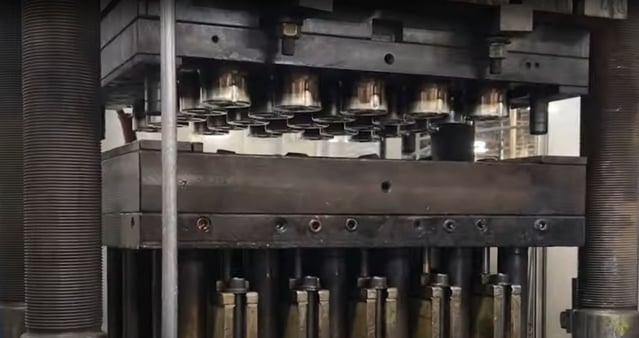
Compression molding is particularly suited for thermoset materials, reinforced composites, structural components, and applications that require strength and stability. In this process, material is placed into a heated mold and compressed into shape as it cures.
Handling compression molding requires experience. Thermosets go through an irreversible chemical reaction. If variables like temperature, pressure, or charge prep are off, parts may under-cure or lose stability. Our team meticulously dials in charge weight, mold temperature/pressure, venting, and tool design to keep runs consistent from first shot to full production.
Key advantages of this method include excellent mechanical properties, strong fiber reinforcement options, and superior dimensional stability. The resulting components display high resistance to heat and chemicals.
Compression molding is often used in demanding environments where durability and long-term performance are essential, including electrical infrastructure, industrial equipment, and defense applications.
Insert Molding
Insert molding crafts complex parts by merging different materials with an inserted component into a single, seamless design. It’s the ideal method for automotive, electronics, medical, and customer goods industries, which demand surgical precision and unbeatable quality.
Davies has mastered the intricacies of insert molding over decades of experience. Our state-of-the-art technology redefines what’s achievable in this craft. Our highly skilled engineering team collaborates closely with customers to craft bespoke insert molding solutions.
Key advantages of this method include lightweight and durable results that can endure demanding environments and deliver consistent performance. It’s ideal for a wide variety of industries that demand zero room for error.
Material Selection: The Foundation of Performance
Material selection is one of the most critical decisions in the molding process. The right material determines how a part performs and how it can be manufactured. Material choice directly influences durability and wear resistance, environmental and chemical resistance, electrical insulation properties, weight and strength, and thermal performance.
Common Material Categories
Thermoplastics: This is a very versatile and wide-ranging material category that can produce complex, detailed shapes and display high strength, low shrinkage, and superior resistance to acids, alkalis, solvents, and oils resistance.
Thermosets: Common thermoset materials, like epoxy, phenolic, and melamine, create high-strength and heat-resistant components. They undergo an irreversible chemical change during curing, becoming solid and for superior stability and durability.
Phenolic: A common thermoset material used at Davies, valued for its excellent dielectric strength, mechanical strength, dimensional stability, heat resistance, wear resistance, low moisture absorption, and machinability.
Selecting the right material requires more than reviewing data sheets. It involves understanding how that material will perform within the actual application environment under real-world stresses, temperatures, and conditions.
Design for Manufacturing Across Industries
Even the best material and process can’t compensate for poor design. Design for Manufacturing (DFM) plays a critical role in ensuring that parts are produced efficiently, consistently, and with minimal variation.
Key design considerations include:
- Wall Thickness: Uniform thickness helps prevent warpage and improves material flow.
- Radii and Transitions: Smooth transitions reduce stress concentrations and improve durability.
- Draft Angles: Proper draft helps parts release cleanly from the mold, reducing drag marks, part distortion, tool wear, and ejection issues.
- Material Flow Paths: Proper geometry ensures complete cavity fill and reduces defects.
Across industries, these principles remain consistent, but their application varies depending on performance requirements. By integrating DFM early in the design process, manufacturers can reduce tooling iterations, improve production efficiency, and enhance part performance.
How Cross-Industry Experience Benefits Customers
One of the greatest advantages of working with a manufacturer that serves multiple industries is access to a broader range of solutions. Cross-industry experience provides insight into:
- Alternative materials that may outperform traditional choices
- Different molding approaches that improve manufacturability
- Proven design strategies used in other sectors
- Performance enhancements that may not be immediately obvious
For example, a material used successfully in aerospace for weight reduction may offer similar benefits in transportation or industrial applications. Likewise, a molding technique used in electrical components may improve durability in other environments. This perspective allows engineering teams to think beyond conventional solutions and identify opportunities for improvement.
Bringing Process, Material, and Design Together
Successful molded components aren’t the result of a single decision. They’re the outcome of aligning material selection, molding process, and part design with the application’s demands. By understanding the application early, selecting the appropriate process, and choosing materials suited for the environment, manufacturers can develop components that perform reliably over time.
Quality has been at the core of Davies Molding for 90 years. Our experience across multiple industries has earned us the expertise to guide customers toward solutions that balance performance, durability, and manufacturability. We know that the best results come from combining our knowledge, experience, and approach right from the start.


