Material selection plays a critical role in part performance, durability, and cost. Our molding experts are available to help you evaluate options and identify the right material for your application.
If you have products or services that you believe could contribute to our mission, we invite you to share your proposal with us through the dedicated form.
At Davies Molding, we’re always looking for driven individuals to help us innovate and grow. Explore career opportunities and be part of something special.
Material selection plays a critical role in part performance, durability, and cost. Our molding experts are available to help you evaluate options and identify the right material for your application.
If you have products or services that you believe could contribute to our mission, we invite you to share your proposal with us through the dedicated form.
At Davies Molding, we’re always looking for driven individuals to help us innovate and grow. Explore career opportunities and be part of something special.
Material selection plays a critical role in part performance, durability, and cost. Our molding experts are available to help you evaluate options and identify the right material for your application.
If you have products or services that you believe could contribute to our mission, we invite you to share your proposal with us through the dedicated form.
At Davies Molding, we’re always looking for driven individuals to help us innovate and grow. Explore career opportunities and be part of something special.
Changing molding suppliers is rarely an easy decision that manufacturers make lightly. In many cases, circumstances outside their control are what prompt this choice; for example, a supplier has gone out of business, production quality is inconsistent, lead times keep slipping, or growing demand has exceeded the current molder’s capabilities.
Regardless of the reason, transferring an existing mold to a new manufacturing partner can feel like a significant risk. Every production manager, supply chain, professional, and engineer has the same concerns:
Will the tool be damaged?
Can part quality be maintained?
How much downtime should we expect?
Will we have to revalidate the entire process?
What happens if something isn’t documented?
These are all valid questions. Davies Molding understands the concerns. Here, mold transfers aren’t considered emergency events that are rushed through; they’re managed as carefully planned production transitions.
Through a disciplined process, experienced engineering support, and proven manufacturing capabilities, we help customers move existing tooling with confidence while protecting production schedules, product quality, and long-term performance.
Why Companies Decide to Transfer a Mold
Very few companies plan for a mold transfer when launching a program. More often, it’s a strategic response to changing business conditions. Some of the most common reasons include:
Maxed Production Capacity: As product demand increases, some molding suppliers can’t scale with their customers. Equipment limitations, staffing constraints, or scheduling bottlenecks create production delays that affect the entire supply chain.
Inconsistent Quality: Over time, changes in staffing, maintenance practices, or process control can result in increasing scrap rates, dimensional variation, or cosmetic defects. Even small inconsistencies can create downstream assembly issues and customer dissatisfaction.
Reactive Tool Maintenance: Well-maintained tooling supports predictable production. When maintenance becomes reactive instead of preventative, molds often experience increased wear, longer downtime, and declining part quality.
Business Changes: Acquisitions, supplier consolidations, facility closures, or geographic shifts frequently require manufacturers to reevaluate their supply chain. In other cases, a molding supplier may simply cease operations, forcing customers to move their tooling quickly.
Regardless of the reason, one objective remains the same: maintain production continuity while minimizing risk.
Why Mold Transfers Can Be Challenging
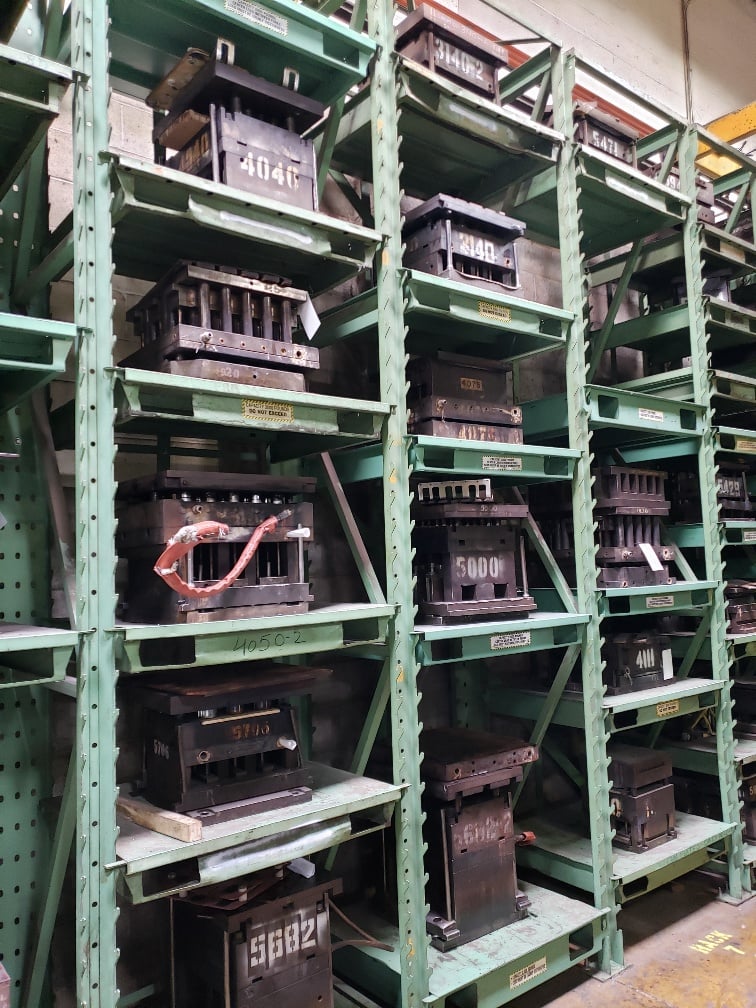
Moving a mold involves much more than physically transporting a piece of tooling from one facility to another. Every mold has a production history.
Machine settings, process adjustments, maintenance records, material handling procedures, and operator experience all contribute to successful production. Unfortunately, many engineers just mentally retain this info, so much of this knowledge is never fully documented.
Common challenges include:
Missing or incomplete process documentation
Unknown tooling wear
Differences in molding equipment and automation
Variations in material handling practices
Validation requirements
Loss of historical process knowledge
Without careful planning, these variables can lead to production delays, unexpected tooling repairs, and extended qualification timelines.
A successful mold transfer begins long before the first production run.
The Davies Approach: A Controlled Production Transition
The engineers over at Davies Molding approach every mold transfer as a structured engineering project rather than a simple tooling relocation.
Step 1: Feasibility Review
Before the tool is moved, our engineering team evaluates:
Part requirements
Material specifications
Production volumes
Existing tooling condition
Critical tolerances
Secondary operations
This assessment helps identify potential challenges early and establishes a roadmap for a successful transition.
Step 2: Press and Process Matching
Not every molding machine is identical.
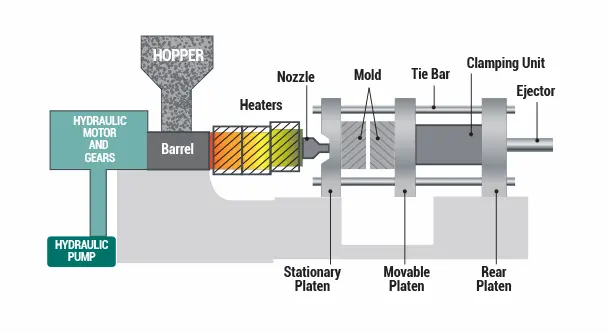
Our team carefully matches transferred tooling with equipment that supports the part’s specific production requirements. Factors such as clamp force, shot size, automation, and secondary operations are evaluated to ensure the mold performs as intended.
Rather than forcing a mold to fit available equipment, we identify the equipment best suited for the application.
Step 3: Tool Inspection and Documentation
Once tooling arrives, it undergoes a comprehensive inspection.
This includes tool condition assessment, wear evaluation, shutoff inspection, and cooling system review, along with maintenance baseline documentation.
Establishing the tool’s condition at intake lets us identify maintenance opportunities before production begins.
Step 4: Controlled Validation
Production doesn’t begin immediately.
Davies performs controlled validation runs to establish stable, repeatable molding processes before transitioning into full-scale manufacturing.
This disciplined approach minimizes surprises and helps maintain consistent part quality from the start.
Step 5: Production Ramp-Up
With validation complete, production is ramped according to clearly defined milestones.
Throughout the process, customers receive transparent communication regarding timelines, production readiness, and tooling status.
We keep each customer up to date on all steps of production as we operate with predictable timelines. We believe every mold transfer is unique so therefore we build disciplined approach unique to each mold.
More Than a New Molder: A Long-Term Manufacturing Partner
A mold transfer should be more than just changing locations. It should improve the overall manufacturing program.
Davies works closely with our customers to evaluate opportunities for improved process stability and better tooling maintenance practices. We strive to achieve reduced production variability while enhancing our secondary operations. This results in greater long-term manufacturing efficiency.
Our experience with high-volume programs exceeding 100,000 parts annually allows us to develop production strategies built around consistency, repeatability, and long-term success.
What a Successful Mold Transfer Looks Like
A successful mold transfer isn’t measured simply by getting the tool into a new press. It’s measured by what happens afterward.
The ideal outcome includes:
Consistent part quality from the beginning
Stable, repeatable production processes
Minimal disruption to customer supply chains
Clear ownership of tooling maintenance
Improved long-term manufacturing reliability
Perhaps most importantly, customers gain confidence knowing their tooling is supported by a manufacturing partner committed to continuous process improvement. To us, it’s not simply part production.
Start the Conversation Before the Timeline Becomes Critical
Not every mold should be transferred, and not every production program is the right fit for every manufacturer.
That’s why Davies Molding begins with a conversation, not a quotation.
We discuss what’s driving the evaluation and what are the current production challenges. We look at tooling condition, program requirements, and potential risks as well.
From there, we’ll determine whether a mold transfer is the right solution, and if Davies is the right long-term partner to support it.
When production continuity, part quality, and supply chain reliability matter, experience makes the difference.
If you’re evaluating a mold transfer, don’t wait until production is at risk. Start the conversation early and let Davies help you make the transition with confidence.